

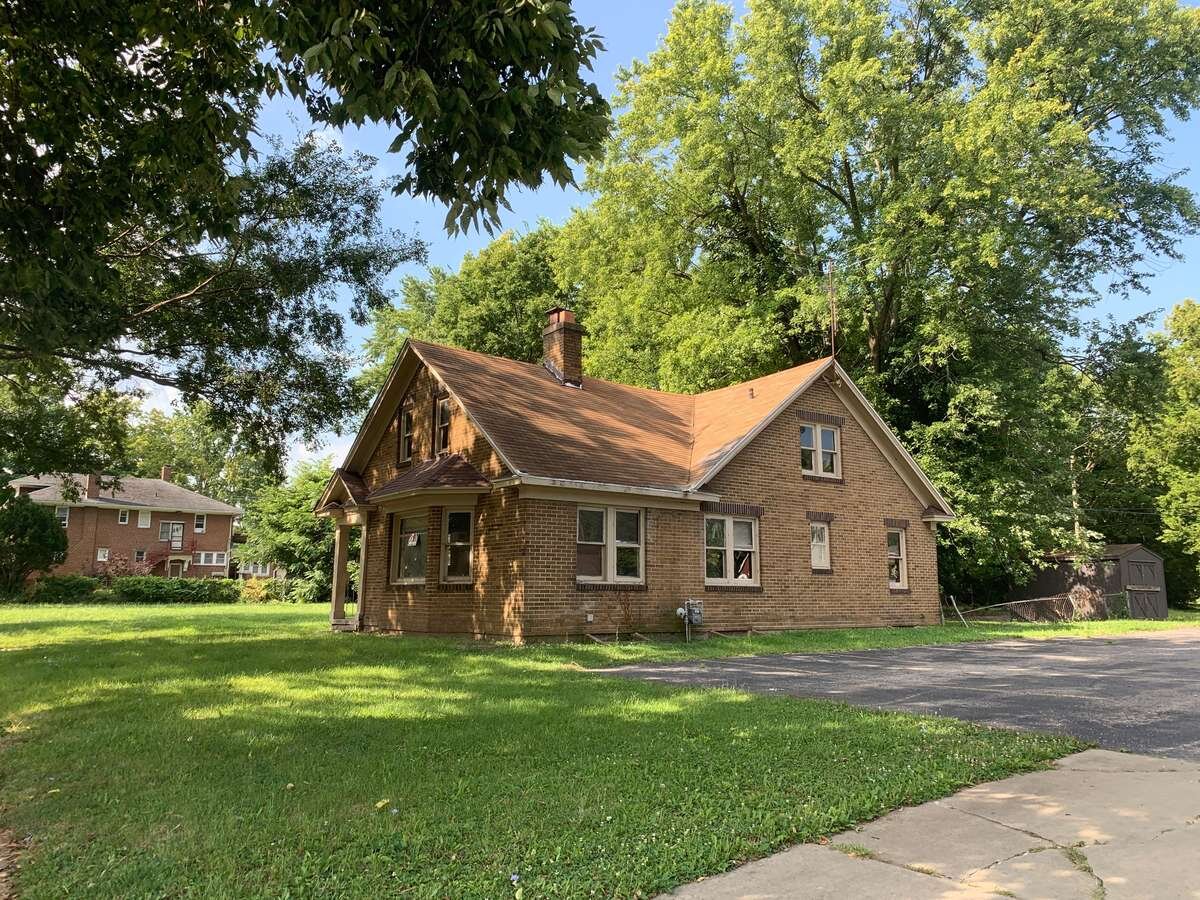
Quick answer: Yes, you can sell an inherited house in Fort Wayne, even while the estate is still in probate. In most Allen County estates, a court-appointed personal representative signs the sale. In an unsupervised estate, Indiana law generally lets them sell real estate without a separate court order. If the house passed through a Transfer on Death deed or joint ownership, probate may not be needed at all. You can sell it yourself, list it with an agent, or sell it as-is for cash. Home 4 You buys inherited houses as-is, pays the seller’s closing costs, and closes on your timeline. Call (260) 999-3100.
Losing someone is hard enough without a house to deal with too. You don’t have to figure it all out today. This guide covers how inherited houses are usually handled in Fort Wayne and Allen County, the three main ways to sell, and what to do if you live out of state.
This article is general information, not legal advice. Every estate is different, so talk with an Indiana probate attorney about yours.
Step 1: Find out who has the right to sell the house
Someone needs legal authority to sign the deed. Who that is depends on how the house was owned.
If the house was in a Transfer on Death (TOD) deed
Indiana allows Transfer on Death deeds for real estate. A TOD deed passes the house to the named beneficiary, but only if it was recorded with the county recorder before the owner died (IC 32-17-14-11). If one names you, you may be able to sell without opening probate. A title company or attorney can confirm the paperwork.
If the house was jointly owned
The Allen Superior Court notes that some property passes without the court’s help, including real estate owned by a married couple as tenants by the entireties (Allen Superior Court general information). In that case the surviving owner may already be able to sell.
If the house was in the deceased person’s name only
This is where probate usually comes in. In Allen County, supervised (ES) and unsupervised (EU) estate cases are filed in Allen Superior Court 2, under the county’s local court rules. The court appoints a personal representative (an executor or administrator), who receives “letters” showing they can act for the estate.

Step 2: Understand supervised vs. unsupervised probate
- Unsupervised administration. The court can allow this when the heirs agree, the estate is solvent, and the will doesn’t call for supervision (IC 29-1-7.5-2). The personal representative can then sell real estate without a separate court order (IC 29-1-7.5-3). It usually makes selling simpler.
- Supervised administration. The court watches more closely, and a sale of estate real estate generally happens under court order (IC 29-1-15-3). It can still be sold, with more steps and usually more time.
What about small estates?
Indiana has a simpler process for small estates. For someone who died after June 30, 2022, the limit is a gross probate estate of $100,000 or less, after liens, encumbrances, and reasonable funeral expenses (IC 29-1-8-1). The Allen County Clerk has an “Affidavit for Transfer of Assets Without Administration” on its probate forms page. Real estate has its own rules under this process, though, so ask an attorney whether your situation qualifies before you count on it.
Creditors and the mortgage
Indiana gives creditors a limited window to file claims. Most claims must be filed within three months after the first published notice to creditors, and no later than nine months after the death (IC 29-1-14-1). That deadline doesn’t wipe out a mortgage or other lien on the house. Those still get paid off from the sale at closing.
Step 3: Keep the house protected while you decide
An empty house still has bills. In Allen County, property taxes are due twice a year. For 2026 the dates are May 11 and November 10, according to the Allen County Treasurer. If taxes are paid late, Indiana adds a 5% penalty, which rises to 10% if they’re still unpaid after 30 days (Indiana DLGF).
While the estate is open, it helps to:
- Keep utilities and insurance active, and tell the insurer the house is vacant.
- Lock up and have someone check on it regularly.
- Hold off on big repairs until you’ve decided how to sell.
Step 4: Choose how to sell
There’s no single right answer. Here are honest pros and cons.
Option 1: Sell it yourself (for sale by owner)
Pros: No listing commission. You set the price and control the process.
Cons: You handle pricing, showings, buyer questions, inspections, and paperwork, all while grieving and settling the estate. If the house needs work, many buyers’ lenders won’t approve it as-is. It’s hardest if you live far away.
Option 2: List with a real estate agent
Pros: Often the best route to full market price if the house is in good shape and you have time.
Cons: You usually pay a commission and seller closing costs. The house may need cleaning, repairs, and staging before it shows well. Showings and buyer financing can stretch the timeline, and the taxes, insurance, and utilities keep running the whole time.
Option 3: Sell as-is to a local cash buyer
Pros: No repairs, no cleaning, and no showings. Take what matters to your family and leave the rest. With a buyer like Home 4 You, you pay no agent commission, and we pay the seller’s closing costs. We can close in as few as 7 days when the title is clear, and around 30 days is common. You pick the date, so it can line up with the estate.
Cons: A cash offer is usually less than the top price a fully fixed-up house might bring on the open market. Compare it with what you’d net after repairs, commission, and months of carrying costs.
If you want to see how a direct sale works step by step, read How We Buy Houses.
If you inherited a Fort Wayne house but live out of state
Families spread out, and the house often stays in Fort Wayne.
- You can usually still serve. A nonresident can serve as personal representative by filing an acceptance, naming a resident agent, and posting a bond. In an unsupervised estate, the court can adjust or waive that bond (IC 29-1-10-1).
- You can check the case online. Allen County estate cases can be looked up on MyCase.
- You may not need to travel. Many closings can be signed with a mobile notary or by mail, depending on the title company.
How Home 4 You helps with inherited houses
We’re a Fort Wayne cash home buyer at 3032 Maumee Ave, and we also buy nationwide. It starts with a phone call: you tell us where the estate stands, and we tell you plainly what’s needed before closing. If probate isn’t finished yet, we can make an offer and set a closing date for after the personal representative has authority to sign.
Sometimes we work with trusted local partners to give you the best option. If we do, we’ll tell you up front who’s buying and what it costs you, which in most cases is nothing. You can request a cash offer online, or read more about selling in Fort Wayne and Allen County. Have more questions? Our FAQ covers costs, timing, and selling as-is.
Frequently asked questions
Can I sell a house in Fort Wayne before probate is finished?
Often, yes. Once the court appoints a personal representative, that person can usually sign a sale. In an unsupervised Indiana estate, they can generally sell real estate without a separate court order. A buyer can also agree to close later, once the paperwork is in place.
How long does probate take in Allen County?
It varies. Creditors generally have three months after the first published notice to file claims, so many estates stay open at least that long. Heir disagreements, supervision, or title problems add time. Your attorney can give a realistic estimate.
Do I have to clean out or fix up an inherited house before selling?
Not if you sell as-is to a cash buyer like Home 4 You. Take what matters to you and leave the rest; we handle the cleanout and repairs.
What if my siblings and I disagree about selling?
Talk it through early, ideally with the probate attorney. In an unsupervised estate the personal representative has authority to sell, but heirs who disagree can ask the court to step in. A cash offer and a market estimate side by side help everyone compare real numbers.
Who pays the closing costs when I sell an inherited house?
It depends on the buyer and the contract. When you sell to Home 4 You, we pay the seller’s closing costs, and there’s no agent commission. Any mortgage, liens, or back taxes on the house are usually paid off from the sale at closing.
Where can I find a probate attorney in Fort Wayne?
The Allen Superior Court suggests the Allen County Bar Association’s lawyer referral service at (260) 423-2358 (source). Court and clerk staff can’t give legal advice.
Talk it through with a local Fort Wayne team
You don’t have to decide anything on the first call. We’ll walk you through your options, with no obligation and no pressure. Call Home 4 You at (260) 999-3100 or get a cash offer online.